




Edited by Dr. Valeria Ascione, pharmacist.
In most cases, dark spots on the groin, underarms, and inner thighs are post-inflammatory hyperpigmentation: When the skin is repeatedly irritated by friction, hair removal, or tight clothing, it defends itself by producing more melanin. These dark spots fade by addressing the cause of the irritation and supporting skin renewal with skin-evening active ingredients—over the course of weeks or months, not days.
There is, however, one case in which those spots are not merely a cosmetic issue but a sign that you should see a doctor—and you can tell by touch: we'll explain this in the next section.
In short
- The most common cause is the’recurrent inflammation: rubbing, shaving, waxing, tight clothing. The skin in the folds is thin and more sensitive.
- If the spot feels velvety to the touch and the skin appears thickened, it's not just a discoloration: you should see a doctor about it.
- A cosmetic product acts on the’appearance of discoloration. It does not affect metabolic or hormonal causes.
- Hydroquinone and mercury are banned in cosmetics in Europe. “Teeth-whitening” products purchased on foreign marketplaces may contain them.
- First, reduce the friction; then apply the treatment. It doesn't work if you do it the other way around.
Why does the skin darken in those specific areas?
The groin, armpits, inner thighs, and under the breasts share three characteristics: the skin is thinner, the areas rub against each other, and the environment is warm and humid. This is the ideal combination for mild but persistent irritation to become chronic.
When inflammation recurs, the melanocytes—the cells that produce pigment—are stimulated and deposit excess melanin. The result is post-inflammatory hyperpigmentation: a flat, smooth patch ranging in color from light brown to dark brown, which corresponds exactly to the areas where friction is greatest.
The most common causes:
- Mechanical Friction: thighs that rub together when walking, seams, elastic bands, tight-fitting or synthetic clothing
- Aggressive hair removal: dry shaving, frequent waxing, ingrown hairs that cause inflammation of the hair follicle
- Sweating and Humidity prolonged, typical of the warmer months and after physical activity
- Harsh cleaning products or scented products used on an area that is sensitive to them
- Folliculitis and Recurrent Irritation, which leave a lasting impression even after they have been resolved
When is a dark spot more than just a cosmetic issue?
When the spot is not flat but the skin appears thickened and velvety to the touch. In that case, it may be acanthosis nigricans, not just discoloration caused by friction.
This condition manifests itself precisely in the skin folds—the neck, armpits, and groin—as a dark thickening of the skin. It is not caused by friction; rather, it is associated with insulin resistance, and it occurs more frequently in people with type 2 diabetes, polycystic ovary syndrome, or who are overweight. In such cases, the spot is a visible sign of something happening in the body.
| Feature | Friction-induced hyperpigmentation | Symptom to be evaluated |
|---|---|---|
| Appearance | Flat spot on the surface | Thickened, raised skin |
| To the touch | Smooth, like the skin around it | Silky, rough, with a different texture |
| Distribution | It follows the friction points | It affects several folds at once, often including the neck as well |
| What to Do | Cosmetic Approach | Medical Examination |
The simplest test is to run your finger over it
If the darkened area is as smooth as the surrounding skin, it’s almost always discoloration caused by irritation. If, on the other hand, it feels velvety, thickened, or has a different texture than the rest of your skin—especially if the same thing happens on your neck or under your arms—it’s not a cosmetic issue: talk to your doctor.
This isn't cause for alarm, and it's usually just friction more than anything else. But it's good to know, because even if you apply a cream for months to a condition with an internal cause, the signal will still go unanswered.
What should you do before applying any treatment?
First and foremost, reduce the irritation. As long as the friction continues, the skin keeps producing pigment, and any treatment applied on top of it works against a cause that is still active.
The correct order is: first, reduce the inflammation; then, support the healing process.
- Change Your Hair Removal Method If your current razor causes redness or ingrown hairs, use a clean razor on wet skin and shave in the direction of hair growth, or consider methods that cause less irritation.
- Reduce friction: Wear cotton underwear; avoid seams and synthetic fabrics that come into direct contact with your skin; and during the hot months, change out of your workout clothes immediately after exercising.
- Gently cleanses, once or twice a day, using specific products. Rubbing doesn't lighten the skin—it causes inflammation.
- Do not use facial exfoliants on these areas. The acids formulated for facial skin are too harsh for thin skin and nearby mucous membranes.
- Dry thoroughly After a shower: Moisture trapped in the skin folds can cause inflammation.
What can a cosmetic product do, and what can't it do?
A skin-evening treatment works on the’appearance For hyperpigmentation: It regulates melanin production, supports surface cell turnover, and reduces the inflammation that fuels the process. It does not remove dark spots, does not act at a deep level, and has no effect on metabolic or hormonal causes.
Active ingredients with a solid rationale for treating this type of discoloration include niacinamide, the derivatives of the vitamin C and the’licorice extract, the latter of which is also valued for its soothing properties: on skin that is already irritated, soothing is just as important as evening out the complexion.
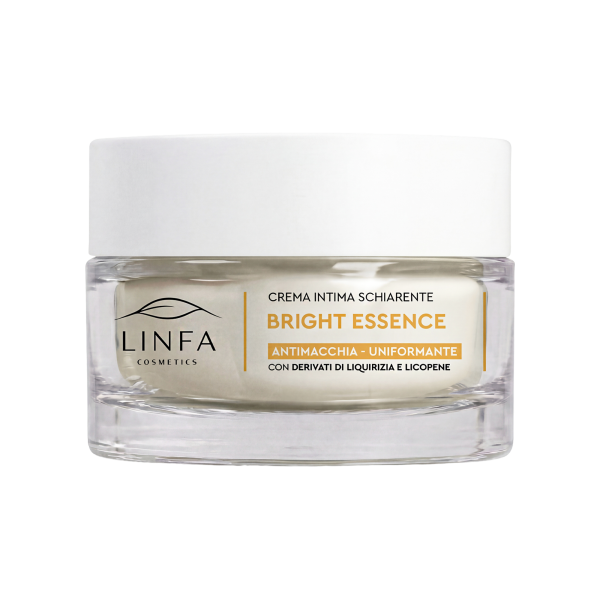
It is used in the evening for a practical reason: that is when the area is not subject to friction from clothing, and the product remains on for hours without being removed by movement.
As for the timeline, no promises
Post-inflammatory hyperpigmentation fades slowly, and the time it takes depends on how deep the pigment is and how effectively the underlying cause can be addressed. We’re talking about weeks and months of consistent treatment, not days. There are no documented standard timeframes for this area: be wary of anyone who gives you a specific date.
Are “teeth-whitening” products bought online safe?
Not always. Some contain mercury or hydroquinone, substances that are banned or strictly restricted in European cosmetics but are still found in products sold on non-European marketplaces, with documented adverse effects.
In the European Union, the EC Regulation No. 1223/2009 prohibits the mercury in cosmetics and does not allow for the’hydroquinone In skin-lightening products: it is permitted only for very specific professional uses and at minimal concentrations. These are two substances that have historically been used in skin-lightening creams, with documented adverse effects ranging from dermatitis to permanent discoloration.
The problem is that products purchased on non-European marketplaces are not subject to these checks. If a product promises quick and dramatic results on such a sensitive area, the right question isn’t how much it costs—it’s what’s in it, and who is accountable for it.
A simple criterion: a complete, legible INCI list available before purchase, a manufacturer that can be identified and has a responsible party in the EU, and no promises of drastic lightening. A compliant cosmetic product lightens the skin gradually. It does not bleach it.
In summary
Dark spots in skin folds are almost always the result of repeated irritation, and they are treated in two steps: first, eliminate the friction, then support skin renewal with active ingredients that even out skin tone and soothe the skin—consistently and without expecting quick results.
And if, when you run your finger over it, the skin isn't smooth but velvety and thickened, the cream isn't the right solution: have a doctor take a look at it.
Frequently Asked Questions
Why has the skin in my groin area darkened?
In most cases, this is caused by repeated inflammation: friction between the thighs, shaving or waxing, tight clothing, or sweating. The skin in that area is thin and reacts by producing more melanin. More rarely, it may be a sign of a condition that should be evaluated by a doctor.
How do I know if I should be worried?
Run your finger over the area. If it feels as smooth as the surrounding skin, it’s almost always a discoloration caused by irritation. If it feels velvety and thickened, and the same thing happens on your neck or underarms, talk to your doctor: it may be a sign associated with insulin resistance.
Can I use exfoliating acids or facial products?
No. Exfoliants formulated for the face are too harsh for the thin skin in the folds and for the proximity to the mucous membranes. There is a real risk of increasing inflammation, which could worsen the discoloration instead of reducing it.
How long does it take to see an improvement?
Weeks or months, depending on how deep the pigment is and how much friction can be reduced. There are no documented standard timeframes for this area: anyone who gives a specific date is not basing it on data.
Does hair removal make dark spots worse?
You can do this if the method causes irritation. Dry shaving, frequent waxing, and ingrown hairs keep the inflammation going, which in turn fuels melanin production. Changing your method or technique is often more effective than any cream applied to the skin.
Are skin-lightening creams bought online safe?
Not necessarily. In Europe, mercury and hydroquinone are banned or strictly restricted in cosmetics, but products sold through non-European marketplaces are not subject to these regulations. Always check the full INCI list and ensure there is an identifiable EU-based manufacturer, and be wary of promises of rapid skin lightening.
Can the spots come back?
Yes, as long as the cause persists. As long as the friction or irritation continues, the skin continues to produce pigment. That’s why choosing the right hair removal method and clothing is just as important as cosmetic treatment—if not more so.
Do you need to apply sunscreen to these areas as well?
Yes, if the area is exposed to the sun: hyperpigmentation, like any other discoloration, can become even darker with UV exposure. The groin and underarms are almost always covered by clothing, but after treatments that increase the skin’s photosensitivity, it’s still worth protecting them.
Do lasers or pulsed light help with these spots?
They can be evaluated by a dermatologist for persistent discoloration, but this is not the first step: if the cause is still active—that is, if friction or irritation is ongoing—outpatient treatment works against a cause that continues to produce pigment, resulting in outcomes that fall short of expectations.
Can friction stains be prevented entirely?
Not always, but the risk is greatly reduced by choosing cotton clothing, using a hair-removal method that doesn’t irritate the skin, and drying off thoroughly after a shower. For those whose skin is already prone to darkening, prevention is more important than treatment.
Can pregnancy cause dark spots in these areas?
Yes, hormonal changes during pregnancy can increase melanin production even in skin folds such as the groin and armpits, similar to melasma on the face. In this case, the cause is not friction, and it is common for the discoloration to fade somewhat after childbirth.