



Edited by Dr. Valeria Ascione, pharmacist.
Acne that appears or recurs after age 25 is not a case of delayed adolescence: it is more often a important hormonal component, it affects the jaw, chin, and neck, and often presents with few lesions that are deep and persistent.
The most common mistake is to treat it the same way you would at age sixteen, using degreasing cleansers and harsh products. On adult skin, which is generally drier and more reactive, that approach can make the problem worse instead of solving it.
In short
- It is typically found on jaw, chin, and neck, and it often follows a cyclical pattern.
- One of the most common causes is hormonal: androgens, menstrual cycle, discontinuation, or starting the pill.
- Degreasing is counterproductive. A weakened skin barrier tends to produce more sebum and cause more inflammation.
- A cosmetic product acts on minor imperfections and the appearance of the skin. It is not a form of therapy.
- Deep, painful, or scarring injuries: dermatologist, not just another product.
Why does adult acne appear after age 25?
The basic mechanism is the same as in adolescence—excess sebum, blocked follicles, inflammation—but the factors that trigger it are different, and it is primarily the role of hormones that changes.
Androgen Hormones stimulate the sebaceous glands. Even small changes in their activity—or increased sensitivity of the skin’s receptors—are enough to alter the quantity and quality of the sebum produced. This is one of the reasons why many women notice a worsening of their condition in the days leading up to their period.
Changes in Hormonal Balance: starting or stopping oral contraceptives, pregnancy, perimenopause. Clinical sources indicate that acne may appear precisely during these transitional phases.
Polycystic Ovary Syndrome It is one of the most common causes of hyperandrogenism in women, and acne can be one of its symptoms, especially when accompanied by irregular periods or increased body hair. This is one of the reasons why persistent adult acne warrants a medical evaluation rather than just a cosmetic one.
In addition to these, there are factors that influence the situation without being its cause: stress, insufficient sleep, certain medications, and cosmetics or sunscreens that are too occlusive.
How can you recognize adult acne?
It differs from the adolescent form in terms of the affected area, the type of lesion, and its progression over time, as summarized in the comparison below.
| Feature | Teenage Acne | Adult Acne |
|---|---|---|
| Zones | Forehead, nose, cheeks | Jaw, chin, neck |
| Type of injury | Many, superficial | Few, deep, and painful |
| Trend | Continue | Often cyclical |
| Surrounding skin | Rich and thick | Often combination, dry, or sensitive |
| Approach | Sebum Control | Balance, not aggression |
What mistakes make adult acne worse?
The most common mistake is to try to control oil on skin that’s already inflamed: harsh cleansers, astringent products, exfoliating too frequently, and skipping moisturizer “because the skin is oily” weaken the skin barrier instead of soothing it.
It’s the same cycle that affects combination skin, but here the consequences are more serious because inflammation is already present. The weakened skin barrier becomes more permeable and reactive, creating a more favorable environment for inflammation, and lesions tend to heal more slowly, leaving more noticeable marks.
Inflamed skin should not be stripped of its natural oils
If your skin feels tight after cleansing, the cleanser is too harsh. If a product stings when applied, it isn’t working better—it’s likely damaging your skin barrier. When it comes to adult acne, gentleness isn’t just a cosmetic consideration—it’s part of the treatment.
What can a cosmetic product do to treat adult acne?
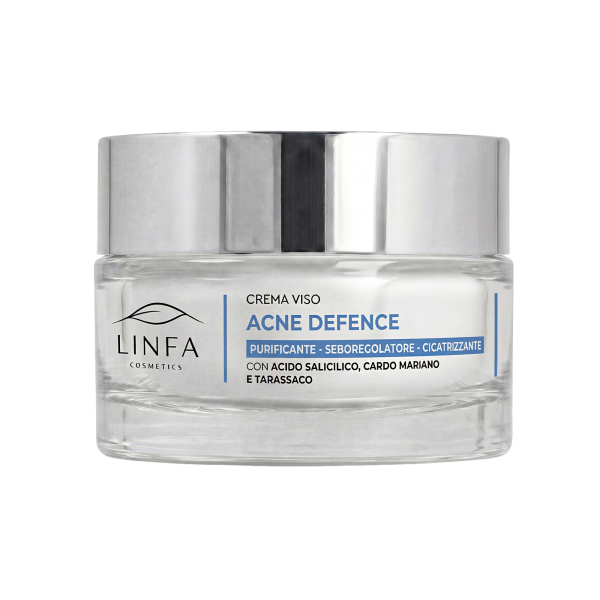
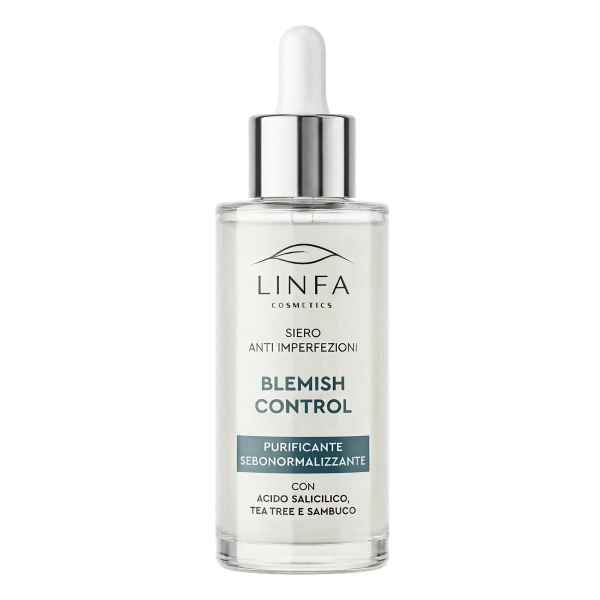
A cosmetic product works on the’skin appearance: It helps keep pores clear, helps control shine, and improves the evenness of the complexion. It may be sufficient for mild, occasional blemishes.
It is not a medical treatment; it does not affect hormone levels and does not replace dermatological therapy when needed. Stating this is not a limitation of the product—it is a prerequisite for using it properly.
The asset with the most solid rationale in this area is the’salicylic acid: Since it is fat-soluble, it penetrates the pores, where sebum accumulates. It should be used at the minimum effective frequency, not the maximum tolerated frequency.
What's the right skincare routine for adult acne?
The most effective routine focuses on a few consistent steps, not on using many harsh products together.
- Gentle Cleansing, twice a day: Washing more frequently can dry out or irritate the skin without providing any additional benefits.
- A Targeted Asset in the affected areas, not everywhere.
- Always Moisturize, even where the skin is shiny. This is the step that's most often skipped, and it's one of the most useful.
- Sun Protection For daily use, with a light texture: the sun can darken post-inflammatory marks and make them last longer.
- Do not touch the lesions. Popping a pimple can turn a temporary blemish into a mark or a scar.
When it comes to exfoliation, the rule is the same as always: once or twice a week, use only one method, and never exfoliate on inflamed skin. You can find out how to choose the right method in the guide at scrubs, enzymatic peels, and acids.
When should you see a dermatologist for adult acne?
It's no longer a cosmetic issue if
The lesions are deep, painful, or nodular. They leave scars or marks that last for months. The condition does not improve after two or three months of following the proper routine. The acne appeared along with irregular periods, increased body hair, or other changes. Or it simply affects how you feel.
There are effective treatments—both topical and systemic—and a medical evaluation is also necessary to rule out hormonal causes that warrant further investigation. Keep switching creams while the condition remains the same is the most common way to waste months and accumulate marks that you then try to fade.
It’s also worth noting the marks that remain afterward: post-inflammatory hyperpigmentation is a topic in its own right; we discuss it in the article on How Do Inflammatory Spots Form?, where the mechanism is the same.
In summary
Adult acne is treated by being less harsh and more consistent: gentle cleansing, a single targeted active ingredient, moisturizing even where the skin is shiny, and daily sunscreen.
And if, after two or three months, the situation hasn't changed, the answer isn't a stronger product. It's a doctor's visit.
Frequently Asked Questions
Why do I get acne in my 30s or 40s?
In most cases, the condition has a hormonal component: androgens stimulate the sebaceous glands, and changes related to the menstrual cycle, the start or discontinuation of birth control, or perimenopause can cause it to appear or worsen. Stress, lack of sleep, and occlusive cosmetics are not the cause, but they can exacerbate the condition.
Is adult acne different from teenage acne?
Yes: It appears mainly on the jaw, chin, and neck, with few but deep and often painful lesions, a more cyclical pattern, and on skin that is usually combination or sensitive rather than uniformly oily.
Do I need to use a cleanser specifically designed for acne-prone skin?
You don't need a specific product, just a mild cleanser: if your skin feels tight after washing, your skin barrier is weakening, and this can worsen inflammation instead of reducing it.
Does moisturizer make acne worse?
No, as long as the texture is right. Skipping this step is a common mistake: dehydrated skin can react by producing more sebum. It’s best to use a lightweight, non-occlusive formula, applied even to shiny areas.
How long does it take to see an improvement?
With a proper skincare routine, it generally takes about two or three months, because skin renewal and the hair follicle cycle take weeks. If nothing changes during that time, the next step is a dermatological evaluation.
Does popping a pimple make it worse?
Yes, almost always: the pressure pushes the contents deeper and can increase local inflammation, turning a temporary lesion into a post-inflammatory mark or a scar that is harder to fade.
Can makeup make adult acne worse?
It isn't the cause, but comedogenic products—or products that aren't removed properly in the evening—can contribute to clogged pores. It's best to choose non-comedogenic formulas and always remove your makeup before going to bed.
Does diet play a role in adult acne?
In some people, a high intake of simple sugars or dairy products appears to be associated with a worsening of symptoms, but the effect varies greatly from person to person. No diet can replace a medical evaluation when the cause is hormonal.
Is it okay to use retinol if I have adult acne?
It can be beneficial because it regulates cell turnover, but on skin that is already inflamed, it should be introduced gradually and in low concentrations, alternating it with a moisturizer to prevent irritation.
Can oral contraceptives help with hormonal acne?
In some cases, yes: certain contraceptives have a regulating effect on androgens and are prescribed for this reason as well. However, this is a treatment option that should be discussed with a gynecologist or dermatologist—it is not a treatment you should start on your own.
Does washing your face more often reduce adult acne?
No: Washing your face more than twice a day does not reduce acne and tends to weaken the skin barrier, which may worsen inflammation rather than alleviate it.