




Edited by Dr. Valeria Ascione, pharmacist.
Cellulite isn't excess fat: it's a fact structural. Under the skin, bundles of connective tissue—the fibrous septa—connect the skin to the deeper layers. When the fatty tissue pushes upward and the septa pull downward, the surface becomes dimpled. This is why cellulite appears even in thin people, and why losing weight doesn’t always reduce it.
Consequently, no product applied to the skin alters those barriers. A cosmetic product works to hydrate the skin, improve its surface appearance, and reduce fluid retention. These are real, visible benefits that should be maintained. They are not a solution.
In short
- It's a matter of fabric architecture, not the amount of fat.
- It also occurs in thin people: It is not a measure of weight.
- It concerns the the vast majority of adult women, given the way the female connective tissue is structured.
- A cosmetic product acts on skin appearance and fluid retention, with effects that will last over time.
- Promises to “eliminate cellulite” with a cream are not tenable, and it's worth knowing this before you buy.
What causes cellulite under the skin?
In the subcutaneous tissue, fat is organized into lobules, separated by collagen septa that act as connecting structures between the skin and the deeper layers.
In the female anatomy, these septa are predominantly perpendicular to the surface, whereas in the male structure they have a more oblique and crisscrossed pattern. The perpendicular arrangement causes the lobules, as they push upward between one strut and another, to create the alternating ridges and valleys that we call the “mattress-like” appearance.
This is one of the main reasons why cellulite affects almost exclusively women, and it has nothing to do with hygiene, diet, or willpower.
Other factors also play a role: hormonal factors, particularly estrogen; the quality of microcirculation, which, when slowed, promotes fluid retention; and genetics, which affects skin thickness and the arrangement of the septa.
It is not a disease, and it is not a defect
Cellulite is an extremely common anatomical feature found in the vast majority of adult women, including those who are very thin and very fit. Addressing it for aesthetic reasons is a legitimate choice. Treating it as a problem to be solved at all costs is what makes this industry so rife with unsustainable promises.
What can a cosmetic product do to combat cellulite, and what can't it do?
A cosmetic product acts only on superficial aspects—fluidity, tone, and evenness—never on the fibrous septa that cause the “mattress effect,” as summarized in the table below.
| Objective | Mechanism | Result |
|---|---|---|
| Reduce fluid retention | Draining ingredients, massage, osmotic effect | Real, temporary |
| Improve skin tone and surface firmness | Hydration and Support for the Skin Barrier | Real, to be retained |
| Even out the skin's appearance | Exfoliation and constant hydration | Partial |
| Modifying the fibrous septa | No topical treatment reaches them | Impossible |
| “Getting Rid of” Cellulite | — | Unsustainable |
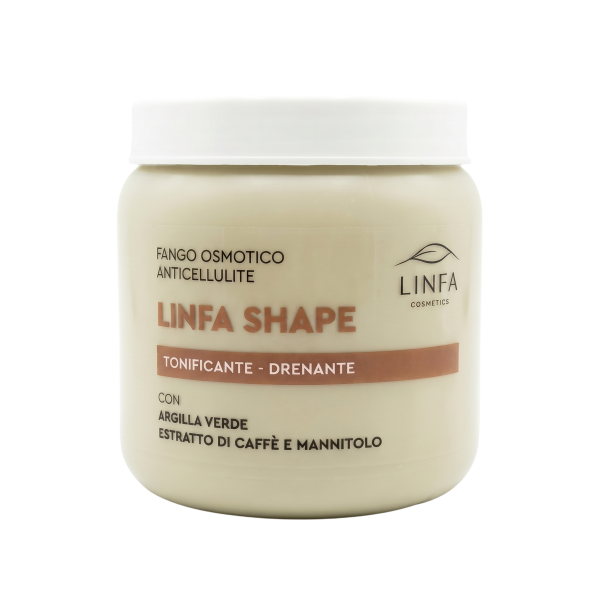
The most commonly used asset in this field is the caffeine, which has a valid rationale but modest effects: we discussed this in detail in the article on What Does Caffeine Really Do in Cosmetics?. Other mechanisms with a basis are the’osmotic effect clay and salts, which address surface fluid retention, and hydration, which makes the skin appear firmer.
Does massage really help with cellulite?
Yes: the mechanical aspect of massage—pressure, upward movement, and consistency—promotes drainage regardless of the active ingredient you’re using, and it’s one of the most underrated aspects of body treatments.
In practice, this means that The same product, when applied quickly or massaged in for two minutes, produces different results. If you're short on time, those two minutes are worth more than a more expensive product applied in ten seconds.
- From the bottom up, from the ankles toward the thighs, following the venous return.
- Moderate and steady pressure, not aggressive: scrubbing hard doesn't remove more.
- Every day for the cream, and in cycles for more intensive treatments.
- On exfoliated skin Once or twice a week: the surface absorbs the product better and the application is more even.
What else affects cellulite besides cosmetics?
Movement, diet, and posture affect the variable component of the condition, with a more lasting effect than that of any topical treatment.
- The Regular Movement It improves microcirculation and muscle tone beneath the skin, which is the structure that supports the skin's surface.
- Cut Back on Salt It acts on the retention component, which is the most visibly variable part of the picture.
- Avoid staying in the same position for too long, whether sitting or standing, reduces fluid retention in the lower extremities.
- Highly Compressive Garments When worn for hours, they impede venous return.
None of these eliminate cellulite. They all reduce the factor that makes it more noticeable.
How to Spot a Promise That Doesn't Hold Up
Be wary of results guaranteed in a matter of days, “before and after” photos with different lighting and postures, reduction percentages without supporting research, and any cosmetic product marketed as a substitute for medical treatment. An honest product tells you what it’s designed to do and how long the effects last.
When does it make sense to see a professional about cellulite?
Talk to a doctor if
Swelling in the lower limbs may be pronounced, asymmetrical, or accompanied by pain, significant heaviness, or skin changes. These conditions involve the venous or lymphatic systems and should be evaluated; they should not be treated with a cosmetic product.
If, on the other hand, your goal is purely aesthetic and cosmetic results aren’t enough for you, there are medical and aesthetic treatments that work through different mechanisms. It’s worth asking those who perform these treatments about them, with the same critical eye you’d use when choosing a cream.
In summary
Cellulite is a structural characteristic of the skin, not excess fat: no cosmetic product can alter the fibrous septa that cause it. A consistent body treatment, combined with massage, reduces fluid retention and improves skin tone and evenness—real results, but ones that must be maintained over time.
Frequently Asked Questions
Does cellulite depend on weight?
Not directly. It depends on the structure of the fibrous septa that connect the skin to the deeper tissues, which is why it also appears in thin, fit people. Weight can make it more or less noticeable, but it is not the cause.
Why does this primarily affect women?
This is due to the way the connective tissue is organized: in the female structure, the septa are predominantly perpendicular to the surface, and the fat lobules push between one septum and another, creating a mattress-like appearance. In the male structure, the pattern is more oblique and crisscrossed.
Can a cream get rid of cellulite?
No. No product applied to the skin reaches or alters the fibrous septa. A cosmetic product can reduce fluid retention and improve skin tone and texture: these are real effects, but they are cosmetic in nature and must be maintained over time.
Is massage really necessary?
Yes. The mechanical component affects drainage regardless of the active ingredient, and the same product applied with a two-minute massage yields different results than a quick application. The motion should be performed from the bottom up, using moderate pressure.
How long does it take to see results?
As for the liquid component, you’ll start to notice a difference after just a few applications. Improvements in skin tone and evenness become apparent after weeks of consistent use. In both cases, the effect lasts as long as you continue the treatment—the results don’t last on their own.
Does exercise make it go away?
It doesn't eliminate it, but it improves microcirculation and muscle tone, which form the foundation upon which the skin rests. Along with reducing salt intake and avoiding spending long hours in the same position, this is what has the greatest impact on the variable component of the condition.
Can cellulite be prevented?
Not entirely, because it depends on the structure of women's connective tissue. Regular exercise, keeping the skin hydrated, and managing fluid retention can help prevent its appearance or slow its progression over time.
Do in-salon beauty treatments work better than creams?
Some professional treatments, such as lymphatic drainage or medical technologies, work through different and more profound mechanisms than cosmetics, but none of them permanently alter the structure of the fibrous septa.
Do anti-cellulite supplements work?
There is no solid evidence that a supplement alone can alter tissue structure. They may help improve circulation, but they are no substitute for consistent topical treatment and massage.
Does cellulite get worse with age?
It may become more noticeable because the skin loses its tone and the underlying support weakens, making an existing irregularity more apparent—not because the fibrous septa change in nature.
What is the difference between cellulite and localized fat deposits?
These are two different things: cellulite is a change in the skin’s surface caused by fibrous septa, while localized fat is an accumulation of excess fat in a specific area. They can coexist, but they require different approaches.