




Edited by Dr. Valeria Ascione, pharmacist.
Start by using it two non-consecutive evenings a week on clean, dry skin, and increase the frequency only after two weeks without any redness, burning, or flaking. Always apply it in the evening, and always use sunscreen the next morning.
These results come from a home-use tolerance study involving 218 women between the ages of 35 and 70, over a six-week period: two evenings a week, then three, then every evening (Mellody et al., International Journal of Cosmetic Science, 2022). Here's how the skin of people using 0.3% retinol reacted.
Nearly nine out of ten people experienced no reactions, or only mild ones. In most cases of irritation, the cause is introducing the product too quickly.
In short
- Starting diagram: 2 non-consecutive evenings per week for 14 days, then 3 evenings, followed by an evaluation. Increase the frequency only if your skin is clear.
- In a study of 218 women, retinol at 0.3% was tolerated much better than 1% (p < 0.0001).
- From November 1, 2025 In the European Union, facial products cannot contain more than 0.3%, expressed as retinol equivalents. That is why 1% has disappeared from store shelves.
- Apply it in the evening because Light breaks down retinol, not primarily because it makes the skin photosensitive. The practical result is the same: use more SPF in the morning than in the evening.
- The first documented visible changes appear around 8 weeks. Promises of results within a week are not supported by the available data.
How much retinol should you use at first, and how often?
Use an amount about the size of a pea all over your face, two evenings a week, at the lowest concentration available.
The gradual approach works for a specific physiological reason: retinol does not act on its own; the skin must convert it through two enzymatic steps, from retinol to retinaldehyde and then to retinoic acid. This two-step conversion makes it less potent than tretinoin, but also easier to tolerate (PubMed, 2022). Tretinoin is a prescription drug: its efficacy is better documented, and it is used in a completely different context.
A retinol-based cosmetic product affects the appearance of the skin: texture, evenness of skin tone, and the visibility of superficial wrinkles. It is not a medical treatment and should not be chosen as if it were. If you have an ongoing skin condition, you should consult a dermatologist, not a product description.
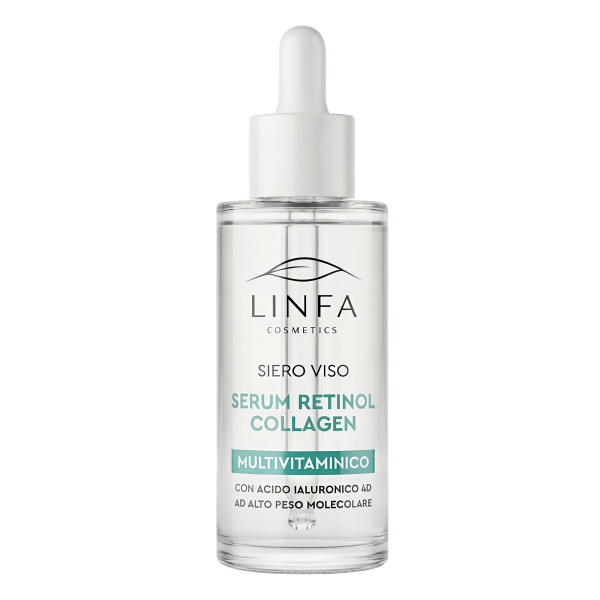
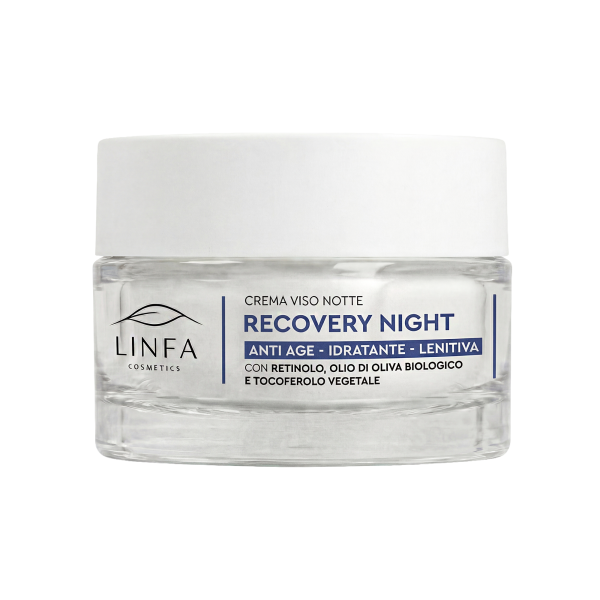
On which vehicle should it be applied?
Serums and night creams differ little in terms of active ingredients, but a lot in terms of how they feel on the skin. The choice depends mainly on how your skin reacts in the initial phase.
The 60-Day Calendar: What to Do, Week by Week
Sixty days is the minimum timeframe needed to determine whether retinol is right for you. The tolerance study involving 218 women used a three-step progression over six weeks; the final two weeks are a practical consolidation phase that we’ve added, which is useful because it’s during the transition to daily use that it’s easiest to increase the dosage too quickly.
2 evenings a week, not consecutive
- What to Do
-
- Apply to dry skin for 10 minutes
- Use an amount about the size of a pea, avoiding the eye area, the creases around the nose, and the lips
- Apply moisturizer right after, or before if you'd rather soften the effect
- SPF every morning
- What Is Normal?
- Mild dryness, a tight feeling on the skin the next day, and a hint of redness that subsides within a few hours.
- To move forward
- No visible peeling and no burning for 14 consecutive days.
3 evenings a week
- What to Do
- Same dose. Temporarily stop using scrubs, brushes, and other exfoliants: use only one harsh active ingredient at a time.
- What Is Normal?
- Mild, localized flaking, especially around the nose and on the chin. Skin that absorbs more cream than usual.
- To move forward
- The peeling subsides within 48 hours of application and does not get worse with each use.
Every other evening, then every evening if tolerated
- What to Do
- If you're going to start using it daily, do so gradually: first five nights out of seven, then every night. If necessary, reintroduce only one other active ingredient at a time, at a different time of day.
- What Is Normal?
- Skin that remains stable. Any dryness can be managed with a moisturizer.
- To move forward
- Two weeks without persistent redness or a burning sensation upon application.
Frequency achieved and maintained
- What to Do
- Consistency. Do not increase the amount of product or switch to a higher concentration to speed up the process. Take a photo of your face under the same lighting conditions every two weeks.
- What Is Normal?
- No reaction. The first signs regarding texture and uniformity may not yet be visible; this is to be expected.
- To move forward
- None. This is the maintenance frequency.
When to Back Down Instead of Persisting
Go back to the previous frequency if flaking lasts longer than 48 hours, if redness is still present the following evening, if the moisturizer stings upon application, or if makeup no longer applies smoothly. Stay at the lower level for at least two weeks before trying to move up again. Stepping back isn’t a failure—it’s how the regimen is designed to work.
Side Effects of Retinol: When to Stop and See a Doctor
Stop using the product and consult a dermatologist if any of the following symptoms appear
Swelling, blisters, exudate, intense itching, a burning sensation that does not subside after rinsing, or widespread redness that worsens with each application.
Topical retinoids are known to cause dryness, erythema, scaling, and a burning sensation during the first few weeks (PMC9112391), but a reaction that worsens rather than stabilizes does not fit into that pattern and should be evaluated by a professional.
Why is retinol used at night?
Because light destroys it. That is the main reason, not photosensitivity. It has been documented that UVA rays degrade retinoids, with a loss of up to 80% for tretinoin when exposed to UVA (PubMed, 2013), and all retinoids share this photolability (Pharmaceutics, 2020).
This distinction has a specific practical implication. If the problem were photosensitivity, simply staying in the shade would suffice. If the problem is the molecule’s stability, it’s also important to store the product away from light: that’s why opaque or airless packaging isn’t just an aesthetic choice.
There is a second, equally compelling reason: retinoids thicken the stratum corneum, reducing part of the skin’s natural protection (PMC9112391). That is why the’American Academy of Dermatology recommends daily sunscreen for people who use retinoids. The practical advice remains the same as always—retinol at night and SPF in the morning—but now you know why.
What can be combined with retinol, and what shouldn't be?
The real rule isn’t “retinol is incompatible with X.” It’s that skin that’s still adjusting can only tolerate one harsh active ingredient at a time. The incompatibility charts circulating online conflate a documented case of chemical degradation with a long list of unverified claims. It’s worth separating the two.
| Combination | Verdict | What to Do |
|---|---|---|
| Benzoyl peroxide | Solid evidence | Alternate: peroxide in the morning, retinol in the evening |
| Vitamin C | Myth | They don't cancel each other out. Just separate them so you don't end up with two irritants. |
| AHA and BHA | It's a Matter of Dosage | No chemical incompatibility. Do not mix them together. |
| Niacinamide and ceramides | In favor | They reduce irritation. These are the combinations to choose |
Do vitamin C and retinol cancel each other out?
No, and there is no peer-reviewed study demonstrating that the acidic pH of vitamin C inactivates retinol. Retinol is sensitive to light and oxygen, not acidity. This myth originated from a theoretical argument about optimal pH levels that has never been experimentally confirmed.
The real risk is something else entirely—and it’s very real: combining two active ingredients that can cause irritation on skin that’s still learning to handle just one. If you want to use both, space them out—vitamin C in the morning and retinol at night—and introduce them at different times; never use them in the same week.
Benzoyl peroxide
Here, the evidence does exist, but it concerns tretinoin: in the presence of benzoyl peroxide and light, tretinoin degrades by more than 50% within two hours and by 95% within twenty-four hours, while adapalene remains stable (Martin et al., British Journal of Dermatology, 1998). There are no direct studies on cosmetic retinol. The prudent approach is to alternate between benzoyl peroxide in the morning and retinol in the evening.
Exfoliating acids, niacinamide, ceramides
No inactivation has been demonstrated for AHAs and BHAs. On the contrary, 5-10% glycolic acid has been associated with a reduction in retinol-induced irritation (PubMed, 2017). The problem, once again, lies in the overall irritant load rather than in the chemistry.
Niacinamide and physiological lipids work in the opposite way: they reduce the erythema and inflammation associated with retinol (PubMed, 2024). A moisturizer containing ceramides also improves tolerability, according to a split-face, blinded-evaluator study (PubMed, 2012). If you need to add anything to your routine during the first two months, add these: a moisturizing day cream for the face When used in the morning, it supports the skin barrier during the adaptation phase. Sunscreen remains a separate product.
Regarding “purging,” a clarification: it is not a scientific term, and the very existence of an initial worsening of symptoms caused by retinoids is debated in the literature (PubMed, 2011). Attributing skin reactions to it—without reassessing the frequency of use—risks overlooking a warning sign that deserves attention.
Why can't you find retinol anymore at 1%? The European limit of 0.3%
As of November 1, 2025, it will no longer be permitted to place on the European market facial and hand care products containing more than 0.3%, expressed as retinol equivalents, or more than 0.05% in body lotions. This is established by the Regulation (EU) 2024/996, which amends the annexes to EC Regulation 1223/2009 regarding retinol, retinyl acetate, and retinyl palmitate. Existing stock may be sold until May 1, 2027.
It is not a ban on retinol
It is a concentration limit, accompanied by a mandatory warning on the label: “Contains vitamin A. Check your daily intake before use.”. The rationale, explained in the SCCS opinion, it does not concern a single cosmetic product but rather cumulative exposure to vitamin A from diet, supplements, and topical products combined. Cosmetics account for the smallest portion of this exposure.
The 0.3% concentration also offers the best balance between tolerability and available evidence. In the tolerability study involving 218 women, the 1% concentration primarily resulted in more adverse reactions, not proportionally greater benefits.
Retinol: When Will You See Results?
When the results are available, according to studies
Horizons documented in the literature, at concentrations ranging from 0.1% to 0.4%
Eight weeks is the earliest time point at which visible improvements were documented in a split-face, placebo-controlled study of 36 subjects treated with 0.1% retinol (PubMed, 2009). At 12 weeks, progressive improvements in pigmentation, skin tone, and wrinkles are observed (PubMed, 2020), and it takes about 24 weeks to see results regarding fine lines and collagen (PubMed, 2007). Before the eight-week mark, there’s a part you can’t see: histological changes detected as early as 12 days with 0.3% retinol (Mellody et al., 2022), but invisible in the mirror.
Then there’s a piece of information you won’t find in the catalogs. A systematic review of nine randomized studies (Spierings, 2021) found that four of them showed no significant differences compared with the vehicle, and that the five with positive results had methodological limitations.
Retinol remains the most extensively studied cosmetic ingredient for mature skin. The available literature, however, does not provide consistent support for it: some of the studies with positive results have methodological limitations that should be noted.
Linfa Cosmetics' Position
Can retinol be used during pregnancy or while breastfeeding?
Available studies on topical retinoids have not shown an increased risk. A meta-analysis of 654 exposed pregnancies, compared with 1,375 controls, found no significant increase in major malformations (OR 1.22; 95% CI 0.65–2.29) according to Kaplan et al., British Journal of Dermatology, 2015, with confirmations in most recent analyses.
However, the recommendation remains to abstain.
As a precaution, dermatological societies recommend discontinuing retinol use during pregnancy and while breastfeeding and discussing this with your doctor (AAD). The situation is quite different from that of oral isotretinoin, a drug with documented teratogenicity, which has nothing to do with a topical cosmetic. In any case, the decision is up to your doctor.
In summary
Retinol doesn’t reward intensity—it rewards consistency. Two evenings a week for two weeks, then three, then daily if your skin can handle it: sixty days to get there without any setbacks, and at least as many before judging the results. Start with a low concentration, use one potent active ingredient at a time, and apply sunscreen every morning.
If you're deciding where to start, look at the wording and the type of vehicle before checking the percentage, which in the European Union has now been standardized upward to 0.3%. You'll find the options in our Face Care and Anti-Aging Collection. And if your skin reacts in a way that isn't described in the sections above, the right thing to do isn't to persist—it's to see a dermatologist.
Frequently Asked Questions About Retinol
How many times a week should you use retinol?
Two non-consecutive evenings per week for the first two weeks, then three evenings per week for another two weeks, and then, if necessary, every evening. This is the escalation schedule used in the tolerance study involving 218 women. The dosage is increased only after two weeks without any adverse reactions.
When should you start using retinol, and at what age?
There is no specific age recommended by guidelines. The tolerance study cited involved women between the ages of 35 and 70. The decision depends more on the condition of your skin and your goals than on your age: if you have any doubts, talk to a dermatologist.
Can you use retinol in the summer?
Yes, along with daily sunscreen, which the American Academy of Dermatology recommends for anyone using retinoids. The reason to apply it in the evening is the molecule’s photolability: UVA rays break it down. If you expect intense and prolonged sun exposure, reduce the frequency.
Can I use retinol and vitamin C together?
There is no peer-reviewed evidence that vitamin C inactivates retinol. The real risk is combining two potential irritants on the same skin. The practical solution is to use them separately: vitamin C in the morning, retinol in the evening, and never use them in the same week.
Does retinol make the skin thinner?
No. Topical retinoids thicken the stratum corneum, which is the outermost layer of the skin, but this does not mean the skin becomes thinner. The practical effect is a temporary reduction in the skin’s natural protection, and this is one of the reasons why sunscreen is necessary.
Why can't I find retinol at 1% anymore?
Because, effective November 1, 2025, Regulation (EU) 2024/996 sets the upper limit at 0.3% in retinol equivalents for facial products. This is not a ban on retinol, but a concentration limit requiring a mandatory warning on the label. Stock that complies with the old regulations may be sold until May 1, 2027.
How much of the product should I apply?
Apply an amount about the size of a pea to your entire face, on clean, dry skin. Using more won't speed up results and increases the likelihood of irritation. Avoid the eye area, the corners of the nose, and the lips, where the skin is thinner.
What should I do if my skin is peeling?
If the peeling is mild and resolves within 48 hours, it is normal during the first few weeks. If it lasts longer, return to your previous treatment frequency for two weeks and increase your moisturizing routine. If swelling, blisters, or persistent burning occur, stop treatment and consult a dermatologist.
Are retinol and tretinoin the same thing?
No. Retinol is a cosmetic ingredient that the skin must convert through two enzymatic steps before it becomes active, whereas tretinoin is already retinoic acid, a prescription drug with a more direct effect. They belong to the same family of molecules but have different contexts of use and documented efficacy.
What happens if I stop using retinol for a while?
There is no safety concern with taking a break: the skin doesn’t “forget” anything. When you resume, however, it’s best to start at the lowest frequency for a few weeks—especially if the break lasted more than a month—rather than picking up right where you left off.
Can retinol be used together with salicylic acid on acne-prone skin?
They are compatible only if introduced at separate times. On skin that is already in the process of adapting to retinol, immediately adding an exfoliant such as salicylic acid increases the overall risk of irritation. It’s best to let the skin adjust to one of the two active ingredients first and then gradually introduce the second one, perhaps at different times of the day.
Leave a Reply